




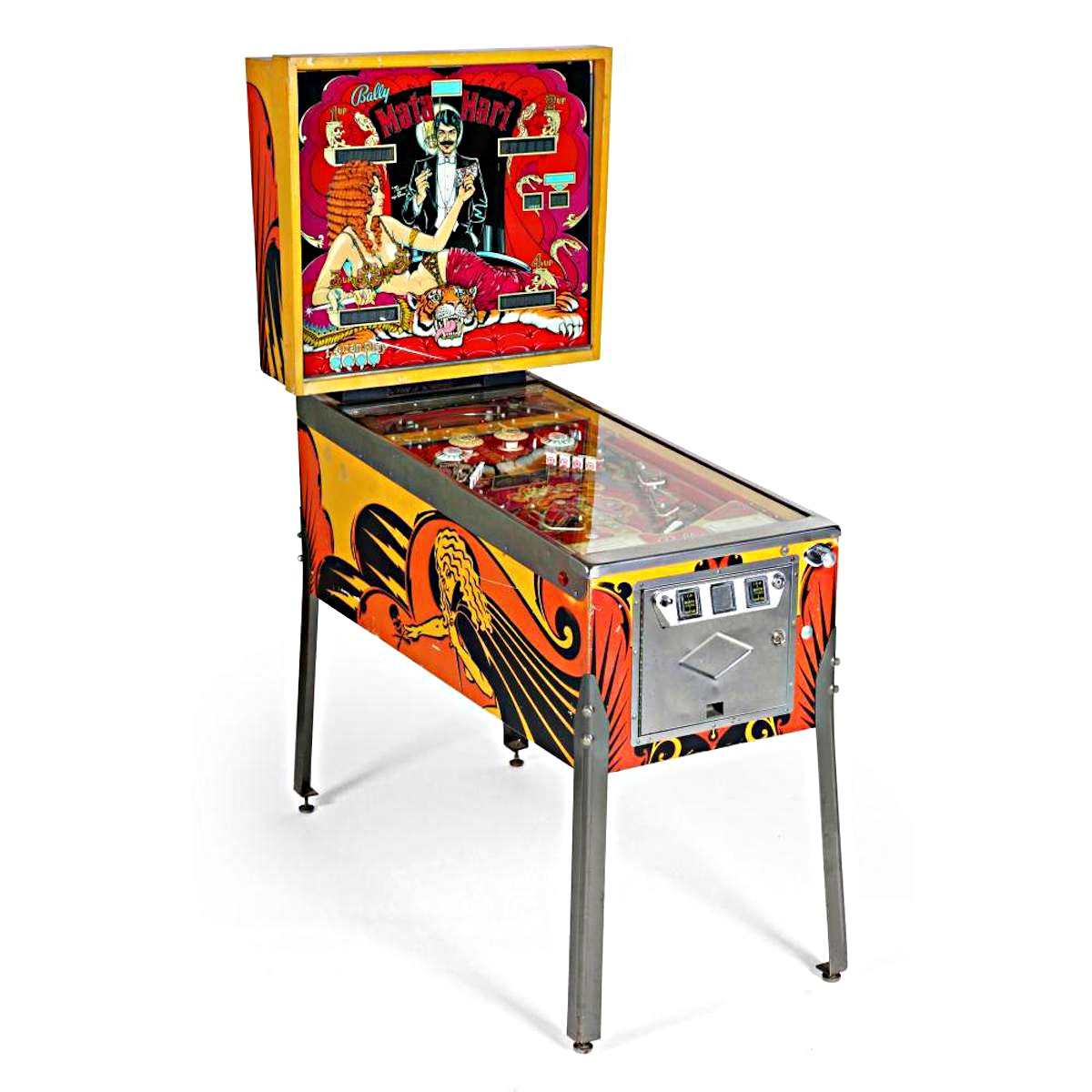

Bally Mata Hari (1977–1978)
One of the most iconic early solid‑state machines—fast, simple, elegant, and a staple in many collections. It’s also a machine that fits beautifully into your restoration‑focused sourcing strategy because of its high production run, accessible parts ecosystem, and strong nostalgia appeal.
Overview and Key Facts
- Manufacturer: Bally Manufacturing
- Release: April 1978 (SS), with a smaller 1977 EM run
- Production: 16,260 SS units + 170 EM units (one of the top 10 most-produced pins ever)
- Design: Jim Patla
- Art: Dave Christensen
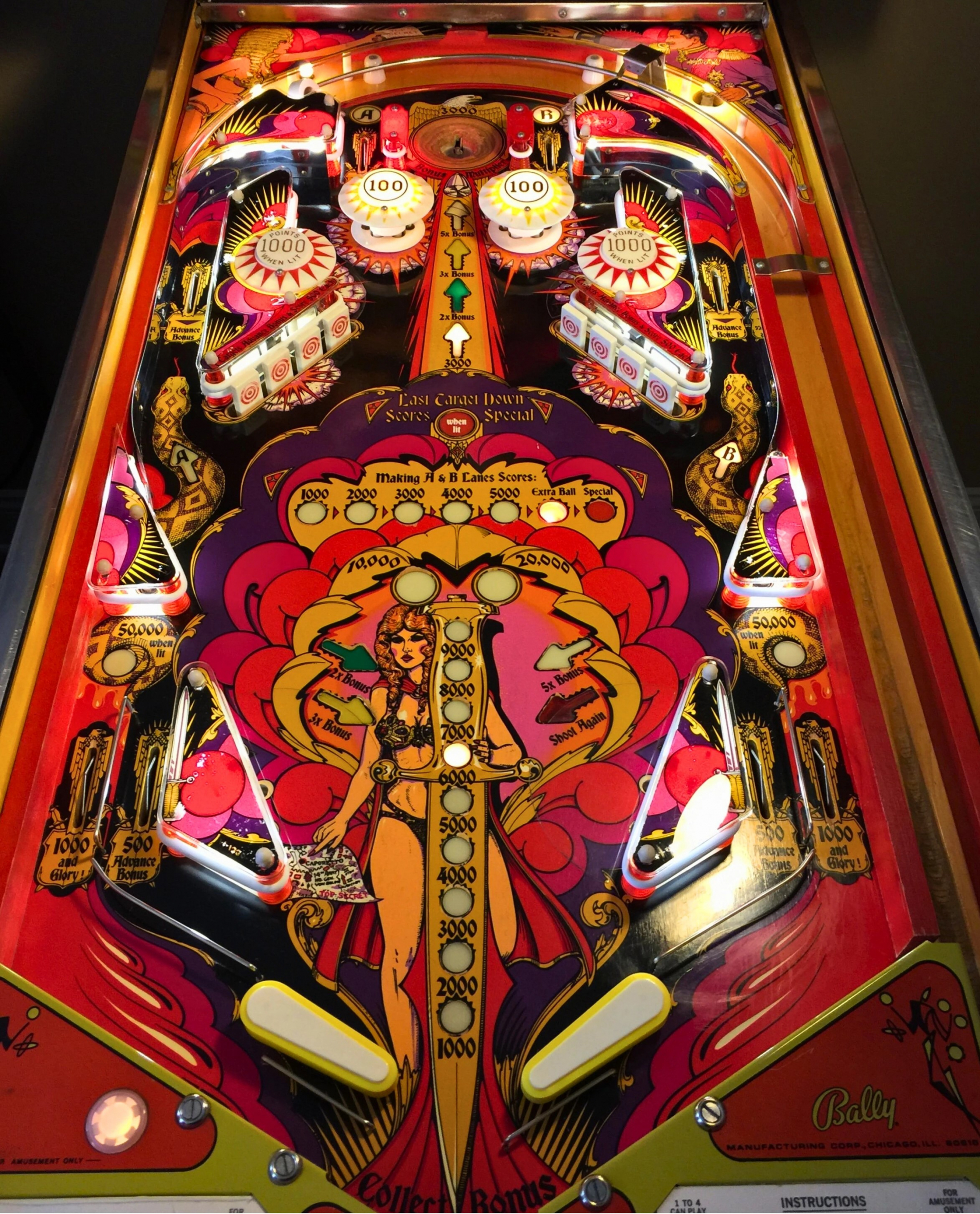
- Theme: The exotic dancer and WWI spy Mata Hari, rendered in bold red, gold, and black art with the famous dagger motif.
The machine is known for its striking backglass and playfield art—Christensen’s work is a major part of its collector appeal.
Gameplay & Features
Mata Hari is a fast, classic Bally layout with straightforward objectives that reward accuracy and control—perfect for competitive cheat‑sheet style breakdowns.
Core Playfield Features
- 2 flippers
- 4 pop bumpers
- Two 4‑bank drop target sets (left and right)
- Kickout hole for bonus multipliers
- A/B lanes for skill shot and bonus advancement
- End‑of‑ball bonus with multipliers up to 5x
Gameplay Personality
- Quick ball times if you’re not controlling the center—classic Bally risk profile.
- Drop targets are the main scoring engine; sweeping a bank cleanly is satisfying and dangerous.
- Bonus multipliers matter more than raw points, especially in competitive play.
EM vs. Solid‑State Versions
Because you source and restore across eras, the distinction matters:
Solid‑State (most common)
- 16,260 units
- Bally AS‑2518‑17 MPU
- More reliable scoring and sound package
- Easier to maintain with modern replacement boards

Reviews
There are no reviews yet.